Orbital Mechanics Simulator
←
About This Project
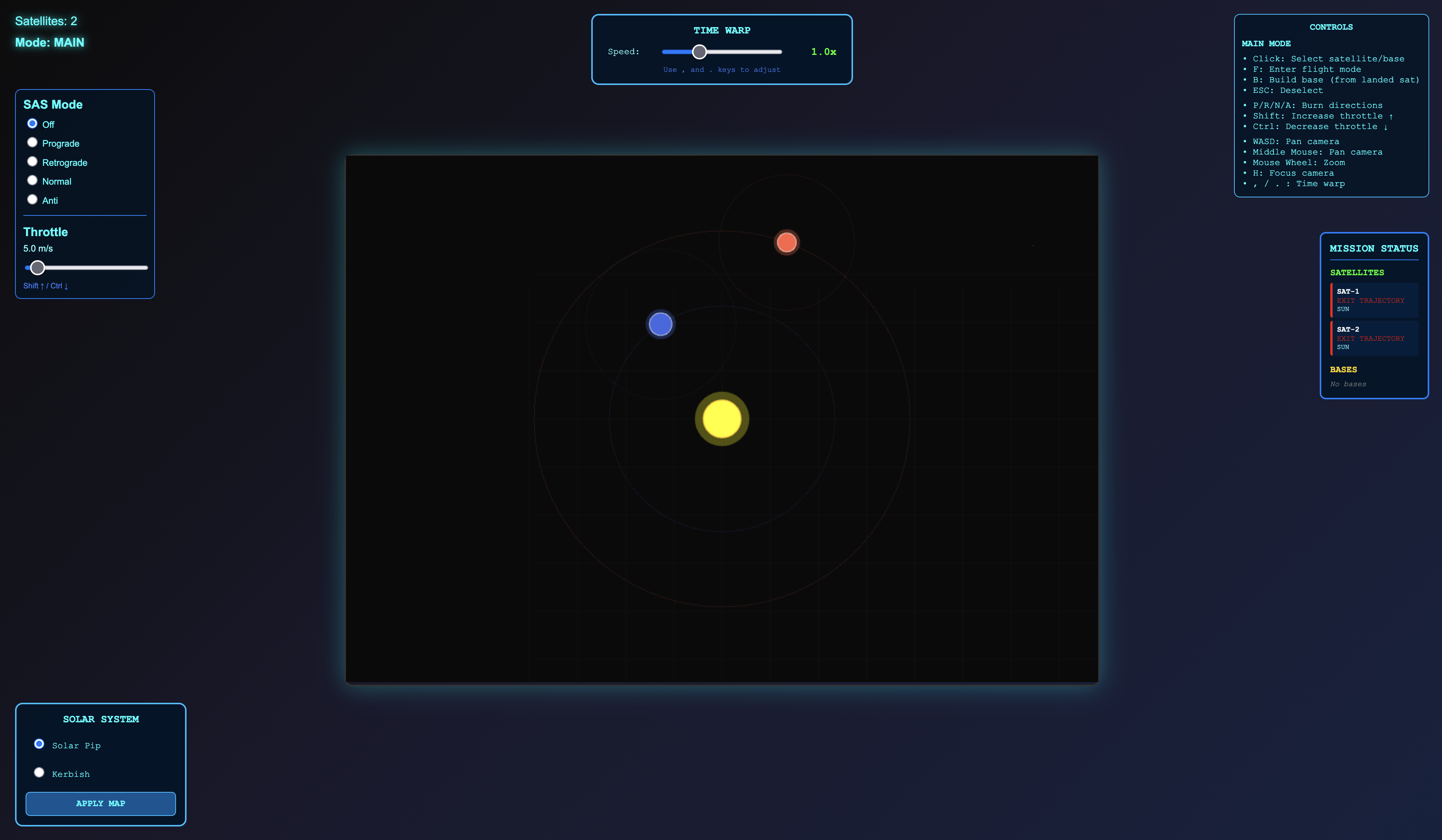
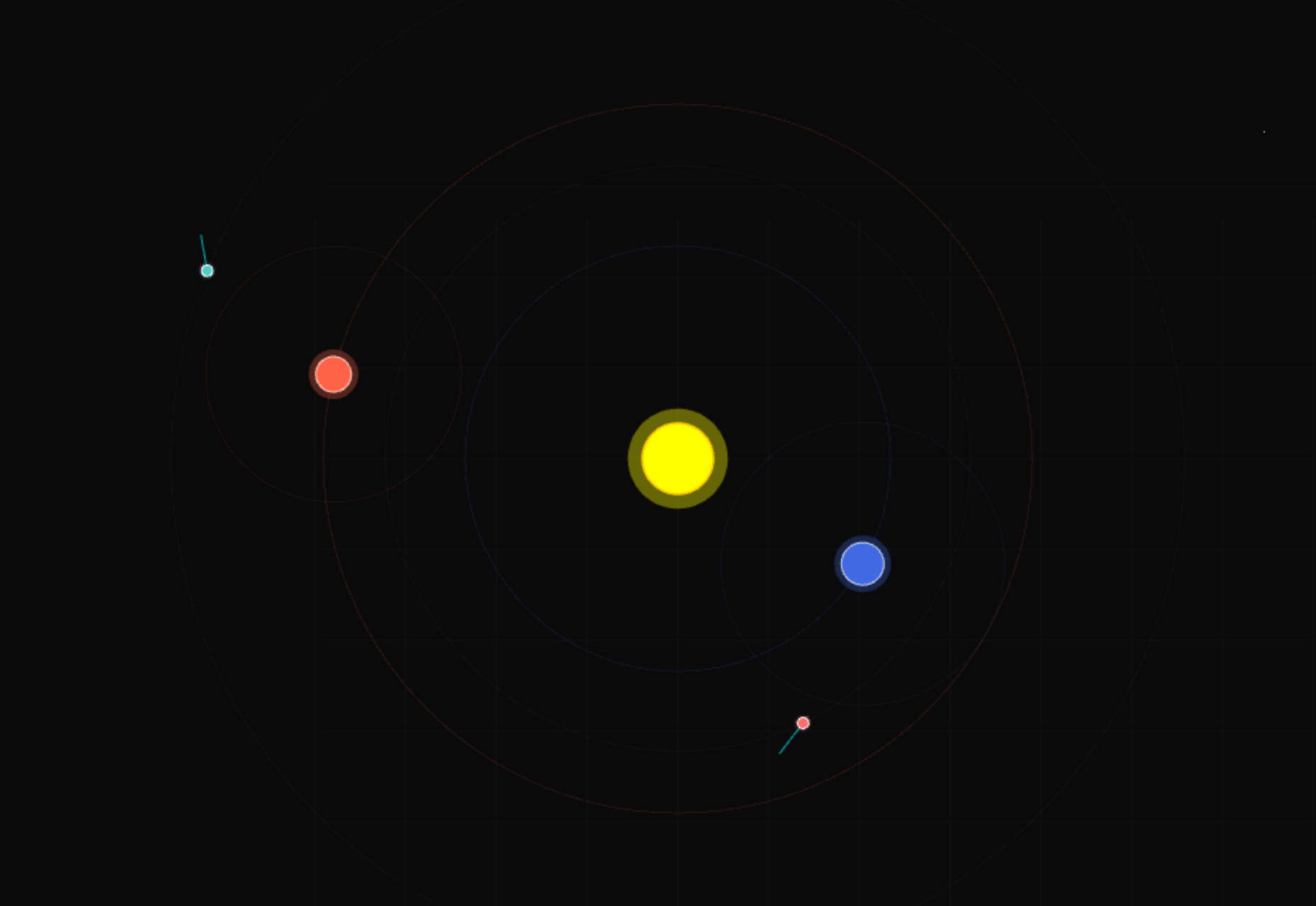
This interactive orbital mechanics simulator demonstrates real-world satellite trajectory physics and energy management principles. Built with Phaser.js, the simulation allows users to control satellite orbits through precise energy adjustments, providing hands-on experience with fundamental aerospace engineering concepts.
I developed this simulation to provide an educational tool for visualizing orbital dynamics and energy conservation principles. By implementing mathematically accurate orbital mechanics, users can explore how energy modifications affect satellite trajectories and orbital stability - core concepts in satellite operations and space mission planning.
Simulation Controls
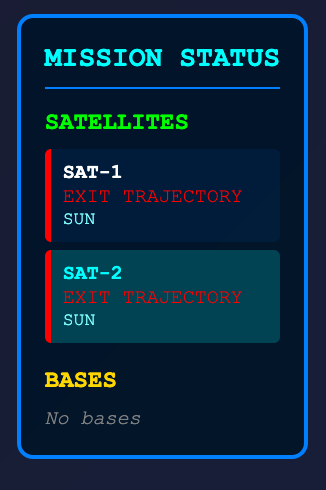
- Click on satellites to select them
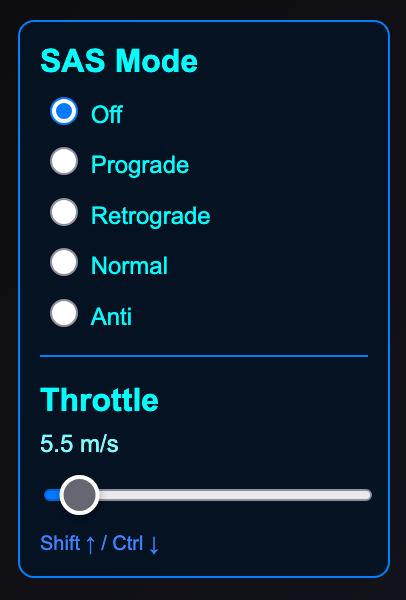
- Mouse wheel or +/- keys to modify energy levels
- Maintain satellites in stable orbital patterns
- Observe the relationship between energy states and orbital trajectories
Key Features
🚀 Physics-Based Modeling
Satellites follow mathematically accurate Newtonian orbital mechanics
⚡ Energy State Management
Real-time energy transfer with persistent orbital effects
✨ Visual Feedback
Trajectory visualization with particle effects for clarity
🎯 Dynamic Parameters
Natural energy decay demonstrates long-term orbital evolution
Technical Implementation
Built with Phaser.js 3.70.0 rendering framework, leveraging HTML5 Canvas for visualization and ES6+ JavaScript for physics calculations. The simulation implements custom algorithms for orbital mechanics, real-time particle systems for visual feedback, and a responsive interface for parameter adjustment.